
You lose the weight, your stomach gets smaller… and somehow the loose skin refuses to leave the party. That frustrating plot twist is one reason the tummy tuck is having another major moment in 2026.
Once mostly associated with post-pregnancy makeovers and dramatic reality-TV transformations, the tummy tuck has moved straight back into the cosmetic-surgery spotlight. Major weight loss, GLP-1 drugs, before-and-after culture and the endless pursuit of a smoother waistline have all helped make the procedure impossible to ignore.
And the numbers back up the hype. According to the latest American Society of Plastic Surgeons statistics, 173,251 tummy tucks were performed in the United States in 2025, keeping the procedure among the country’s three most popular cosmetic surgeries.
What Is a Tummy Tuck, Really?
A tummy tuck removes loose abdominal skin and reshapes the midsection, often while tightening a weakened abdominal wall. In plain English: it tackles the hanging, folding or stubbornly loose stomach area that dieting and workouts simply cannot shrink away.
The official name is abdominoplasty, but almost nobody casually says, “I’m thinking about an abdominoplasty.” Tummy tuck won that branding battle years ago.
The biggest misconception is that it is basically aggressive weight loss surgery. It isn’t.
A tummy tuck is much more about shape, loose skin and structure than making someone dramatically lighter. That’s why some people can be relatively slim and still have enough loose abdominal skin to consider one.
- Loose skin: often left after pregnancy, aging or major weight loss.
- A lower-belly fold: the area that may remain even after the scale drops.
- A stretched-looking stomach: especially after pregnancy or major weight changes.
- Abdominal muscle separation or weakness: something a surgeon may address during a full tummy tuck.
What a tummy tuck does not magically do is turn an entire body into an edited Instagram silhouette. The most convincing results usually look less like “new body installed” and more like the stomach finally matches the rest of the person’s frame.
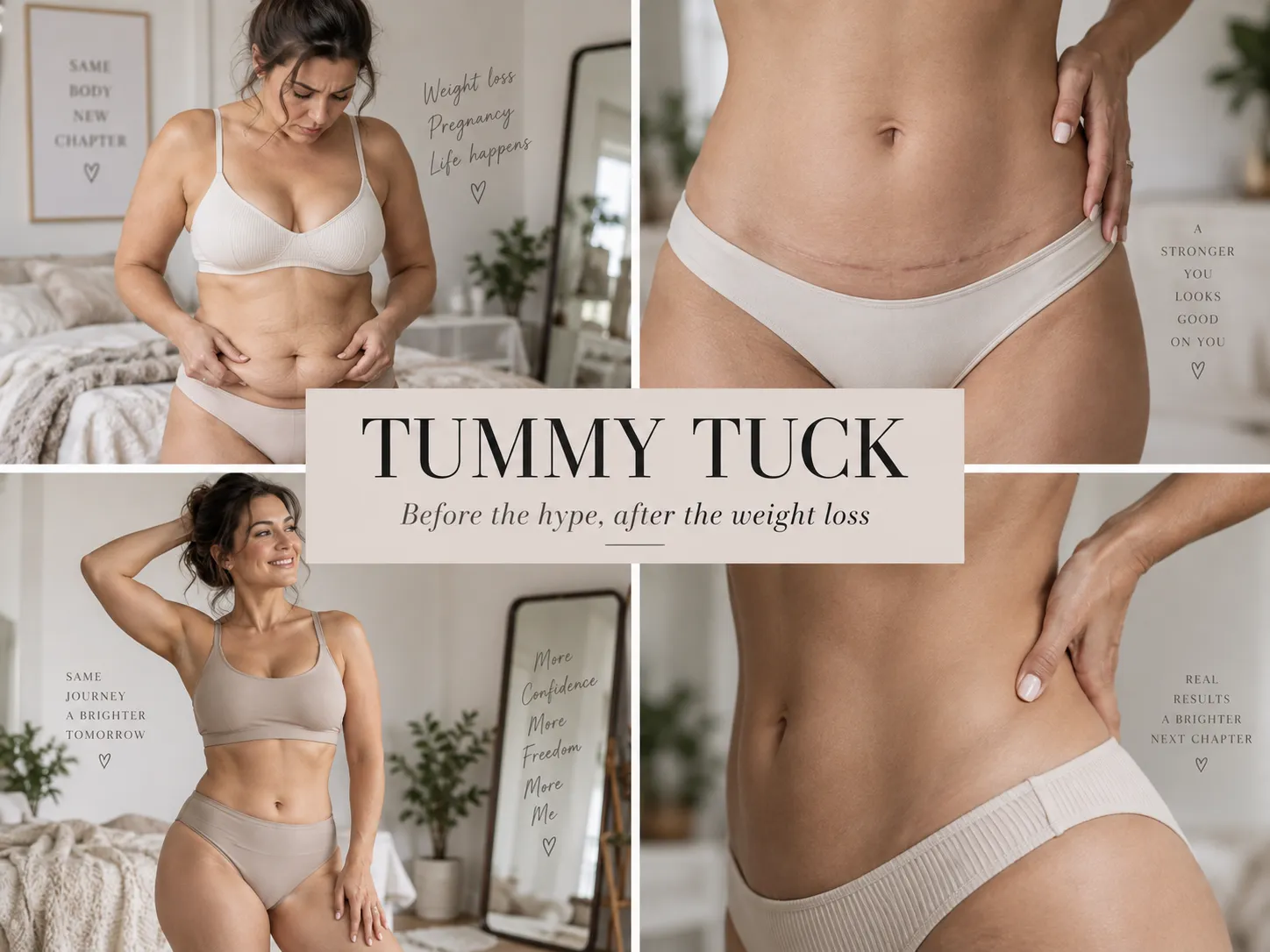
Why Is the Tummy Tuck Suddenly So Hot Again in 2026?
Massive weight loss — especially the GLP-1 weight-loss boom — is helping push tummy tuck conversations back into the mainstream. People are losing significant amounts of weight, only to discover that thinner does not automatically mean tighter.
This may be the biggest tummy tuck story of 2026. Ozempic, Wegovy, Zepbound and other GLP-1 medications have completely changed the weight-loss conversation, and cosmetic surgery is now dealing with the after-effects.
The American Society of Plastic Surgeons reported that 82% of its member surgeons received consultation requests related to GLP-1 use during 2025. When those surgeons were asked which body procedures came up in GLP-1-related consultations, tummy tuck led the list, with 88% reporting those conversations.
🔥 The 2026 tummy tuck twist: the modern patient is not necessarily asking, “How do I lose my belly?” Increasingly, the question is, “I already lost the weight — what do I do with the skin that’s still here?”
That distinction matters because loose skin plays by different rules than fat. You can spend another six months doing crunches and still not convince stretched skin to pack its bags.
Pregnancy remains another huge reason people consider the procedure. But today’s conversation has expanded far beyond the classic “mommy makeover” label.
Men, older adults and people who have experienced dramatic weight loss are increasingly part of the tummy tuck story too. This is no longer one narrowly defined cosmetic-surgery crowd.
Tummy Tuck vs. Liposuction: Aren’t They Basically the Same Thing?
No — tummy tuck and liposuction solve two very different stomach problems. Liposuction mainly targets unwanted fat, while a tummy tuck is the heavy hitter when loose skin and a stretched abdominal area are the bigger issues.
This is where before-and-after photos can become seriously misleading. Two people may both appear to have a “belly” before surgery, but one may mostly have stubborn fat while the other has hanging skin.
The procedure that makes sense visually can therefore be completely different.
- Main problem is stubborn fat? Liposuction may be the more obvious comparison.
- Main problem is loose, hanging skin? A tummy tuck addresses something liposuction cannot simply suction away.
- Both fat and loose skin? Liposuction and tummy tuck are sometimes combined.
- Skin looks tight but the belly still projects? The answer may not be obvious from photos alone.
This is also why the phrase “tummy tuck without surgery” deserves some skepticism. Nonsurgical treatments may change small amounts of fat or skin tightness, but they do not literally recreate what happens when substantial loose skin is physically removed.
In other words, a machine promising a full surgical-style transformation during your lunch break is selling a very different product.
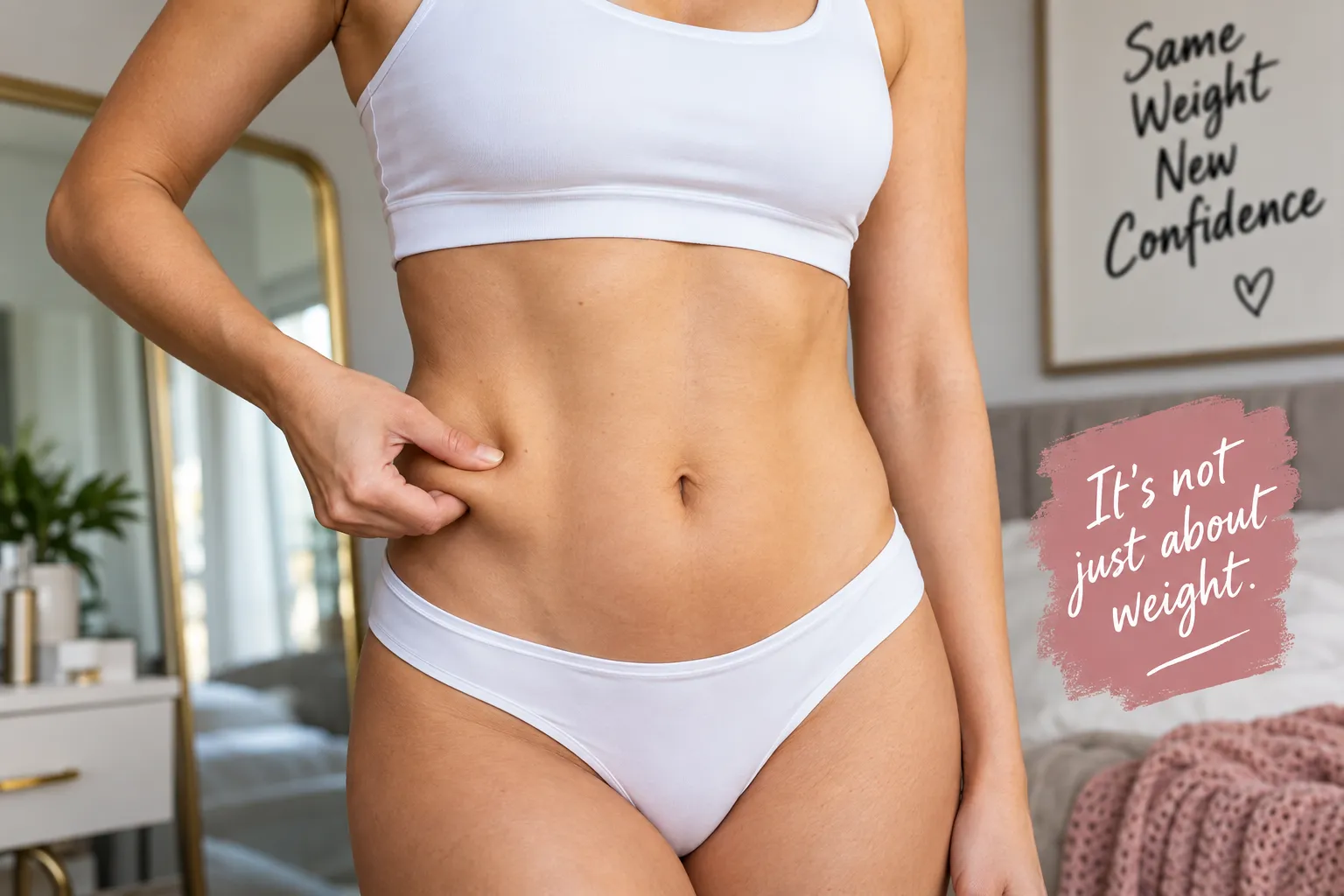
Mini Tummy Tuck vs. Full Tummy Tuck: What’s the Difference?
A mini tummy tuck mainly targets the lower stomach, while a full tummy tuck addresses a much larger area above and below the belly button. An extended tummy tuck goes even farther around the waist when loose skin continues toward the sides.
The word “mini” sounds wonderfully easy, doesn’t it? Mini scar. Mini recovery. Mini drama.
But mini does not mean “a cheaper full tummy tuck.” It is designed for a smaller problem.
Mini tummy tuck: best known for addressing loose skin concentrated below the belly button. The incision is generally shorter, and the belly button usually requires less dramatic repositioning.
Full tummy tuck: deals with loose skin across a larger portion of the abdomen and may include tightening weakened or separated abdominal muscles. This is the version behind many of the more dramatic tummy tuck before-and-after transformations online.
Extended tummy tuck: moves beyond the front of the stomach to deal with extra skin extending toward the flanks and hips. It can create a larger change, but it also means a longer scar.
This is one of those situations where going “mini” just because it sounds easier can be a cosmetic mistake. If the loose skin clearly extends beyond the small area a mini tuck can address, the compromise may become obvious afterward.
What Makes a Tummy Tuck Look Amazing — or Obviously “Done”?
The best tummy tuck usually creates a smoother, believable abdominal contour without making the belly button or scar scream for attention. When something looks strange, the eye often notices the details before the viewer even realizes what feels wrong.
Ironically, the stomach itself may not be the giveaway. The belly button can become the accidental star of the show.
A belly button that appears extremely round, unusually tiny, stretched or oddly positioned can make an otherwise flat stomach look more obviously surgical. Social media has made people surprisingly skilled at spotting this detail in celebrity bikini photos and transformation posts.
Then there is the scar.
A full tummy tuck typically leaves a horizontal scar low on the abdomen. Ideally it can be positioned where underwear or swimwear hides much of it, but scar length naturally depends on how much skin needs to be removed.
Other visual issues that can make a result look less natural include:
- a stomach that appears unnaturally tight compared with the rest of the body;
- uneven fullness on the left and right sides;
- small bulges where the ends of the scar meet the hips;
- a scar sitting noticeably higher than expected;
- an artificial-looking belly button;
- remaining loose skin that makes the transformation look unfinished.
And sometimes the supposed “bad tummy tuck” isn’t actually the surgery at all. Lighting, posture, swelling, shapewear, camera lenses and aggressive photo editing can radically change how the same stomach looks.
That is why one paparazzi photo is rarely enough evidence to declare a celebrity tummy tuck a masterpiece — or a disaster.

What Does Tummy Tuck Before and After Really Look Like?
Tummy tuck before-and-after results usually show the biggest change in loose skin, lower-abdominal folds and the overall smoothness of the waistline. The dramatic difference is often less about becoming thinner and more about removing the skin that was hiding the body’s actual shape.
Look at a strong before-and-after set and the first thing you may notice is how much cleaner the lower stomach looks. Clothing often sits differently too because there is no longer the same fold or bunching underneath it.
But comparison photos can play tricks.
A good before-and-after comparison should ideally use similar lighting, posture, distance and camera angle. A relaxed “before” photo next to a flexed, spray-tanned, perfectly lit “after” photo may be great marketing, but it is terrible detective work.
For celebrity comparisons, the same rule applies even more strongly. Different red carpets, pregnancies, weight changes, shapewear and photo retouching can create a fake surgical timeline where none has ever been confirmed.
Look for consistent changes across multiple appearances rather than one dramatic photo. That’s especially important before claiming that someone has secretly had a tummy tuck.
Pregnancy-related comparisons require even more caution. A flatter stomach years after childbirth is not automatic proof of surgery, just as loose skin after childbirth does not mean a celebrity will eventually have one.
How Bad Is Tummy Tuck Recovery?
A full tummy tuck has a real recovery period and should not be confused with the quick bounce-back associated with injectables or tiny cosmetic tweaks. Many patients can return to lighter, nonstrenuous work after a couple of weeks, but full recovery and unrestricted activity can take considerably longer.
This is the part glamorous transformation posts tend to skip. Instagram jumps from “before” to “snatched” with suspicious efficiency.
Reality has an entire middle chapter.
Early recovery can involve swelling, tightness, compression garments and temporary drains depending on the technique used. Standing completely straight and moving normally may not feel effortless immediately after surgery either.
A mini tummy tuck can involve less downtime because the treated area is smaller. An extended tummy tuck generally moves in the opposite direction because more skin and a larger portion of the waist are being addressed.
The scar also does not disappear because the after photo was uploaded. According to ASPS, tummy tuck scars can continue fading for several months to a year.
So when you see a celebrity or influencer photographed on vacation looking impossibly smooth, remember that social media rarely gives you the unedited recovery timeline. It gives you the reveal.
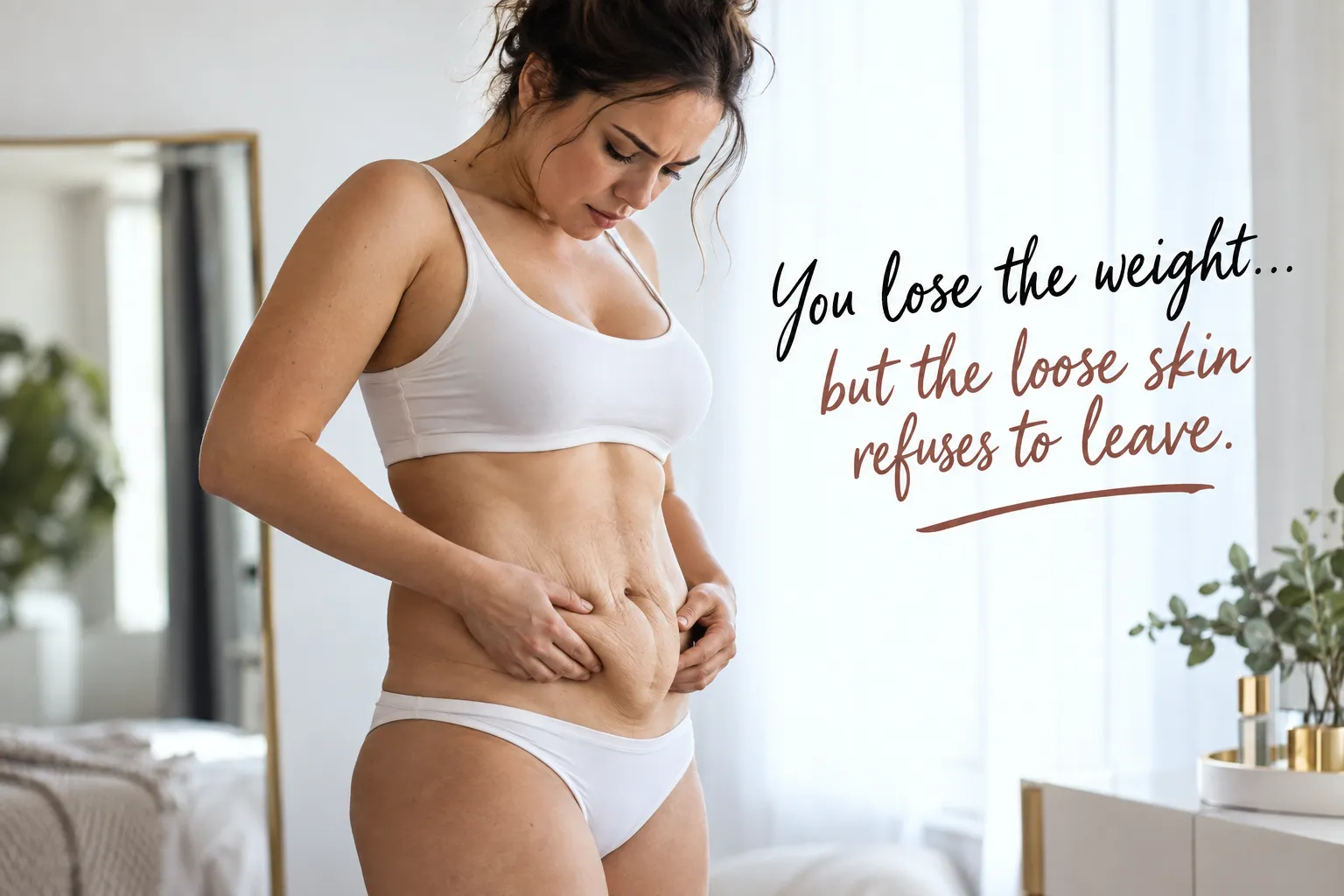
Can a Tummy Tuck Remove Stretch Marks Too?
A tummy tuck can remove some stretch marks only when they happen to be located on skin that is removed during the procedure. It is not a universal stretch-mark eraser.
This misconception makes sense because some before-and-after photos show both tighter skin and fewer visible stretch marks. The trick is that the marked skin may literally have been part of the section removed.
Stretch marks higher on the abdomen may remain, although their position can shift when the remaining skin is pulled downward. So anyone expecting completely spotless, Photoshop-smooth skin from a tummy tuck alone may be expecting the wrong transformation.
The same applies to cellulite, every tiny crease and every bit of body texture. A tummy tuck changes abdominal contour; it does not turn human skin into CGI.
Can You Gain Weight After a Tummy Tuck?
Yes — a tummy tuck does not prevent future weight gain or weight loss. Major changes afterward can alter the result because the remaining skin and abdominal tissues can stretch again.
This explains why dramatic weight swings matter so much when people compare long-term tummy tuck photos. Surgery can reshape the stomach, but it cannot freeze someone’s body at one exact weight forever.
Pregnancy can change the result for the same obvious reason. The abdomen expands, skin stretches and the abdominal wall can separate again.
This doesn’t mean every tiny weight fluctuation destroys a tummy tuck. It simply means the procedure is better understood as reshaping the body you have rather than permanently locking it into one silhouette.
That distinction has become especially relevant during the GLP-1 era. Someone who is still rapidly losing weight may look very different six or twelve months later than they do during the first exciting phase of their transformation.
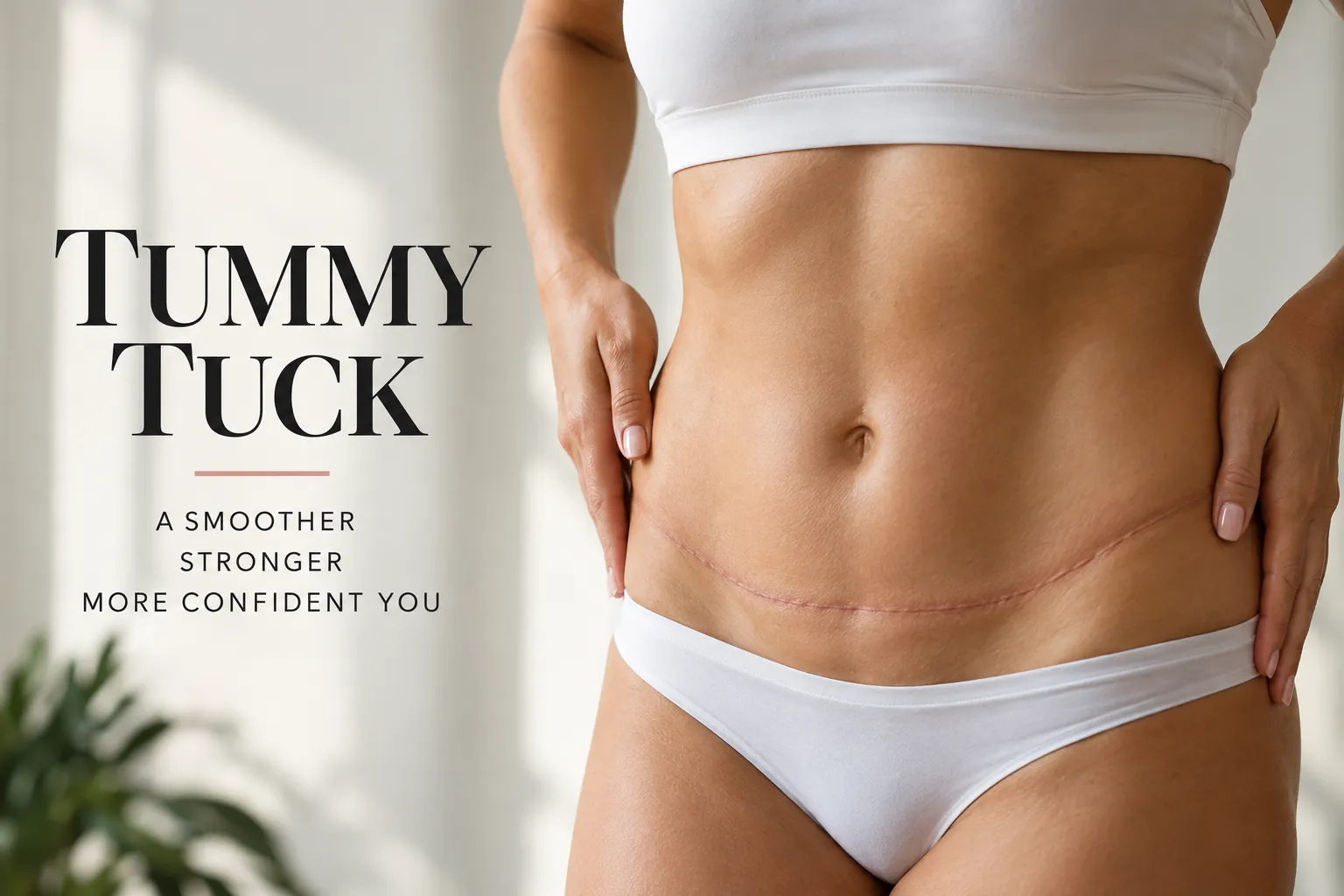
So, Is the Tummy Tuck Still Worth the Hype in 2026?
The tummy tuck remains one of the most powerful ways to change a loose or stretched abdominal area, which explains why it is still among America’s most popular cosmetic surgeries. In 2026, its relevance may actually be increasing as major weight loss creates a new generation of people dealing with excess skin.
The latest numbers are hard to ignore. ASPS recorded 173,251 tummy tucks in 2025, up about 2% from the previous year, even while tummy tuck consultation interest connected with GLP-1 weight loss became especially prominent.
But the most interesting shift may be cultural rather than statistical.
The dream body is moving away from the wildly exaggerated curves that dominated parts of social media a few years ago. A smoother waist, tighter-looking torso and more proportional silhouette now fit much better with the current “you, just polished” aesthetic.
That makes the tummy tuck strangely perfect for the moment.
It can also explain why celebrity tummy tuck rumors will probably keep appearing whenever a famous person suddenly shows up with a dramatically flatter midsection. Sometimes surgery may genuinely be part of the story; sometimes we’re looking at weight loss, workouts, pregnancy recovery, shapewear, editing — or simply an outrageously flattering camera angle.
The visual change may be obvious. The explanation usually isn’t.
And that’s what makes tummy tuck before-and-after culture so addictive: one photo can look like an open-and-shut case, while the full story is usually hiding somewhere outside the frame.