
If you thought Hollywood was still blaming every suspiciously sharp jawline on water, sleep and a $400 face cream, 2026 has officially entered the chat.
The facelift is back — except the new version is trying very hard not to look like a facelift at all. Instead of the stretched, frozen, wind-tunnel look that made older celebrity transformations infamous, today’s obsession is simple: look fresher, sharper and strangely well-rested while leaving everyone wondering what changed.
And celebrities are becoming far less interested in pretending nothing happened.
Denise Richards has openly discussed the full facelift she underwent in 2025, Kris Jenner turned her latest facial refresh into one of the biggest beauty stories of 2025 and 2026, Ricki Lake has proudly documented her results, and Keltie Knight accidentally revealed her own “secret” facelift on television.
So what exactly changed? Why are facelifts suddenly cool again — and why does everyone keep talking about the deep plane facelift?
Welcome to the new facelift era, where the ultimate compliment isn’t “You look younger.” It’s “Wait… did you do something?”
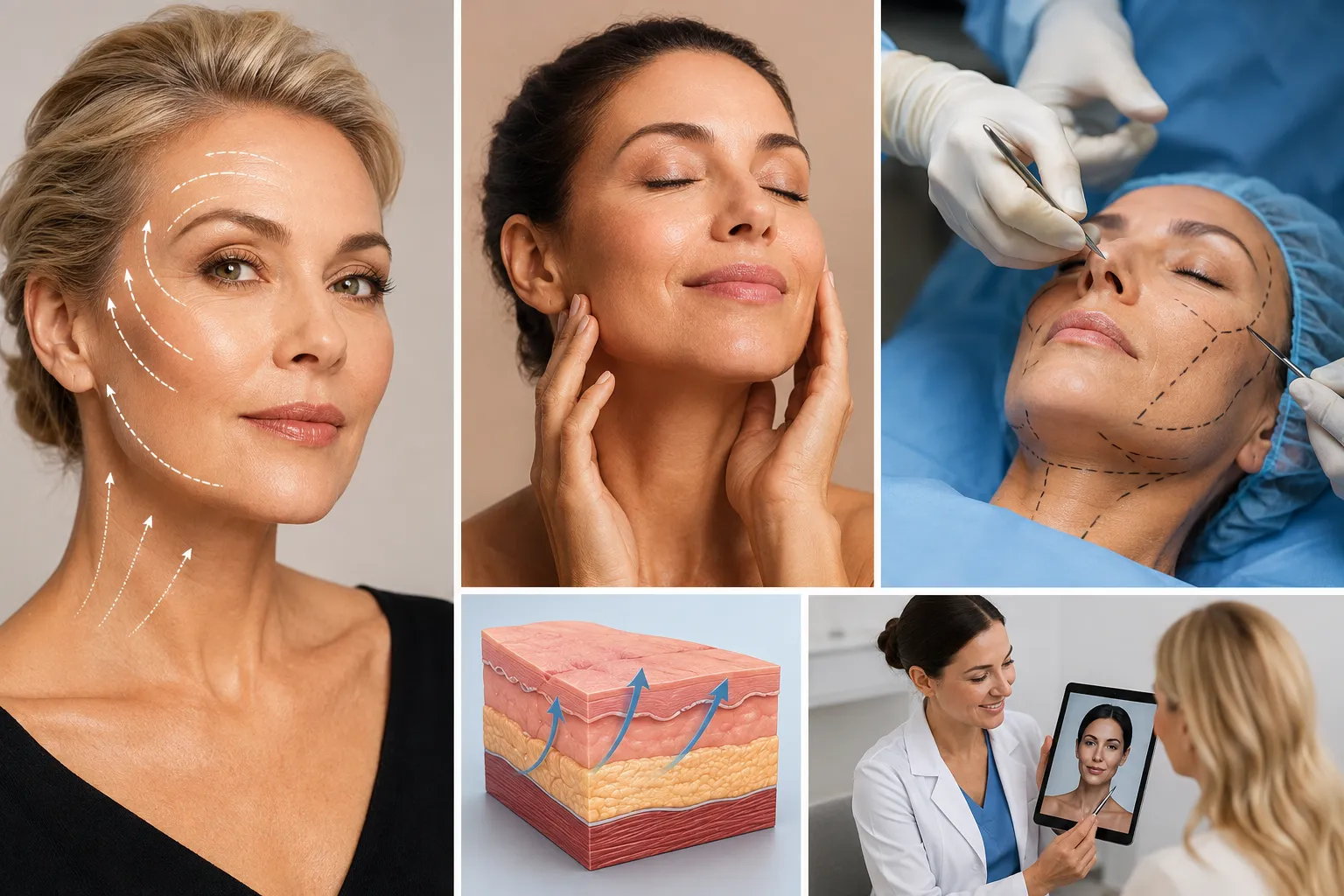
Why Is the Facelift Suddenly Cool Again in 2026?
The facelift is booming again because the goal has changed: people increasingly want subtle structural rejuvenation rather than an obviously “done” face. Celebrity transparency and more natural-looking results have pushed the procedure back into the beauty spotlight.
The American Academy of Facial Plastic and Reconstructive Surgery’s 2026 trend report described a broader move away from dramatic transformations and toward natural-looking, strategic changes. The organization projected a 19% increase in facial procedures nationwide, reaching an estimated 1.6 million procedures.
Facelifts themselves were hardly disappearing before that. American Society of Plastic Surgeons data shows that more than 79,000 facelifts were performed in the United States in 2024, with facelift volume rising about 1% from the previous year.
But the cultural shift may be even more interesting than the numbers.
A generation ago, a celebrity facelift could become tabloid shorthand for looking “plastic.” Now an impressively crisp jawline can generate millions of views, dozens of TikTok breakdowns and an online hunt for the surgeon responsible.
There is also evidence that facelift patients are getting younger. Recent AAFPRS surveys have pointed toward growing interest among people in the roughly 35-to-55 age range rather than the old stereotype of waiting until your 60s or 70s.
In other words, the modern mindset is becoming less “fix everything later” and more “make a smaller change before everything changes dramatically.”
- Then: wait until facial aging becomes obvious.
- Now: intervene earlier and aim for subtlety.
- Then: tight skin was the obvious goal.
- Now: facial shape and a believable jawline matter more.
- Then: deny everything.
- Now: sometimes name the surgeon on Instagram.
Hollywood didn’t invent the facelift comeback, but it definitely gave it a very expensive-looking PR campaign.

What Does a Facelift Actually Change?
A facelift mainly targets the lower and middle face by repositioning areas that have dropped or softened with age. Think cheeks, jowls, the jawline and frequently the transition between the face and neck.
Despite the name, it isn’t simply a case of grabbing loose facial skin and pulling it toward the ears. Modern facelift techniques focus much more on restoring shape underneath the skin so the surface does not have to be stretched unnaturally tight.
That’s a major reason newer before-and-after photos can look very different from the stereotypical celebrity facelift of decades past.
A well-balanced facelift may make these changes appear:
- a cleaner, more visible jawline;
- less heaviness around the jowls;
- cheeks that appear slightly higher or fuller;
- a smoother transition from the jaw into the neck;
- less loose-looking skin through the lower face;
- an overall appearance that looks rested rather than dramatically altered.
What a facelift doesn’t automatically fix is just as important.
It isn’t a magic eraser for every forehead line, every eye-area change, uneven skin texture or sun damage. That’s why celebrity transformations often involve several things happening at once rather than one mysterious surgery that somehow changed everything.
Someone may combine facial lifting with work around the eyes, brows, neck or skin. Add professional makeup, hair, lighting, filters and a flattering camera angle, and suddenly Instagram detectives have a three-hour investigation on their hands.
Was it really one facelift — or twelve different variables appearing in the same photo?
Why Does Everyone Keep Talking About the Deep Plane Facelift?
The deep plane facelift has become the buzzword of the current facelift boom because it promises the thing people want most: noticeable lifting without an obviously pulled appearance. Instead of relying heavily on skin tension, the approach moves deeper facial structures together.
Sounds revolutionary, right?
Not exactly. The deep plane concept has existed for decades, but social media, celebrity transformations and increasingly detailed before-and-after content have turned it into one of the hottest beauty search terms of the 2020s.
In everyday language, imagine a couch cushion whose fabric has started sliding downward. Pulling only the outer fabric extremely tight may smooth it temporarily, but repositioning what sits underneath can create a more natural shape.
That’s essentially why the phrase “deep plane facelift” has become shorthand online for the elusive “lifted but not stretched” look.
There are several facelift labels you’ll now see everywhere:
- Traditional facelift: a broader facial rejuvenation procedure, particularly through the lower face.
- Mini facelift: typically a smaller-scale approach aimed at more limited changes.
- Deep plane facelift: focuses more heavily on repositioning deeper facial layers together.
- Face and neck lift: treats the lower face and neck as one connected visual area.
The funny part? Even surgeons don’t always agree that the marketing label automatically determines the final result.
A 2026 U.S. survey of facelift surgeons found deep-plane techniques were extremely common among respondents, but it did not find that the technique alone guaranteed longer-lasting results. Translation: “deep plane” sounds sexy on TikTok, but the name on the menu isn’t the entire story.
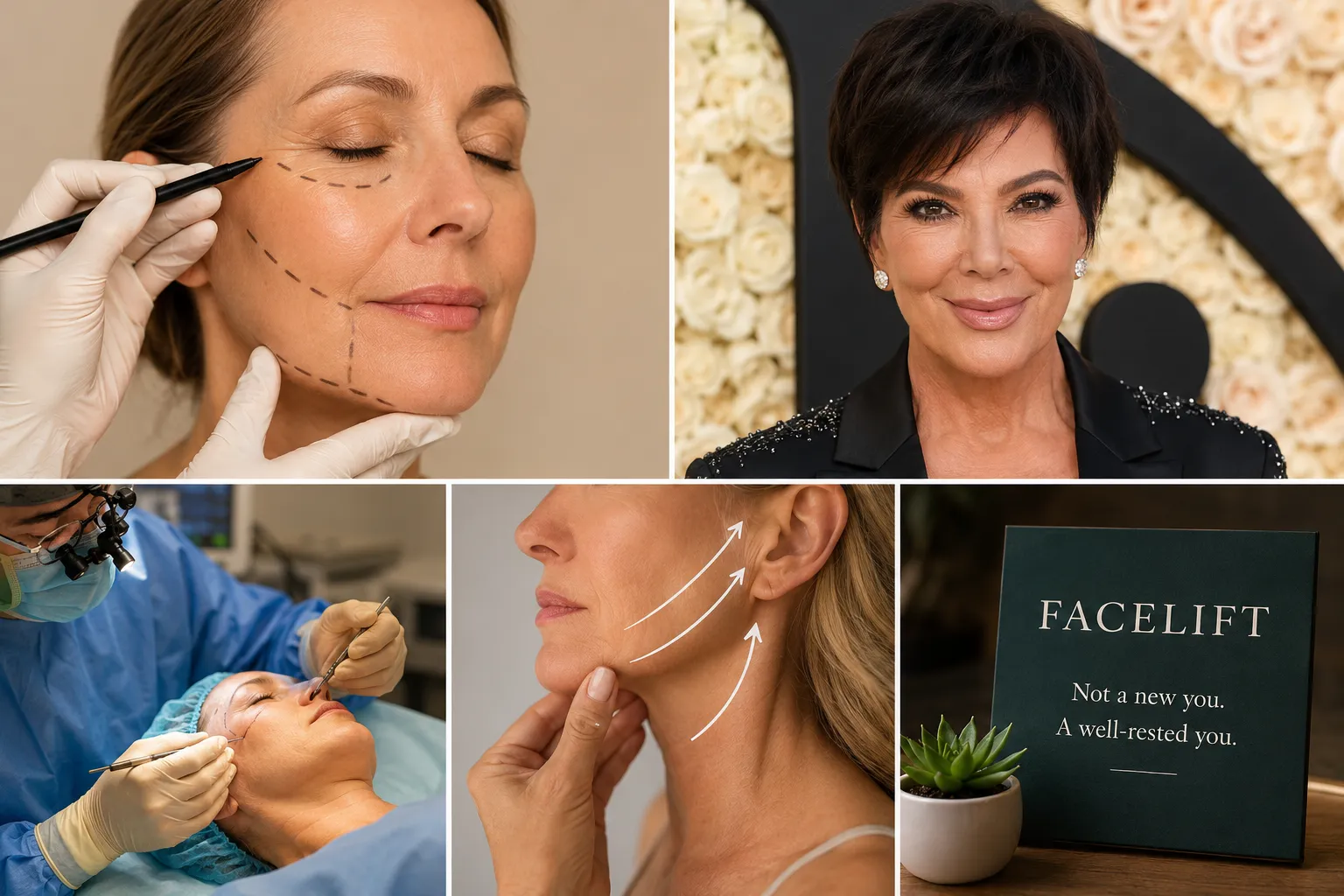
Which Celebrities Have Actually Admitted to Getting a Facelift?
Kris Jenner, Denise Richards, Ricki Lake and Keltie Knight are among the celebrities who have publicly confirmed recent facelifts. That’s important because plenty of other viral celebrity facelift stories remain nothing more than speculation based on photographs.
Kris Jenner became the poster woman for the modern facelift conversation after appearing in Paris in May 2025 with a dramatically refreshed look. The internet immediately went into detective mode.
Jenner later confirmed that she had undergone another facelift, roughly 15 years after her previous one, with surgeon Dr. Steven Levine. She told Vogue Arabia that she viewed the procedure as her personal version of aging gracefully.
The story didn’t end there.
In April 2026, Jenner publicly pushed back against reports claiming she regretted the facelift, making it very clear that she was happy with both her results and her surgeon.
Denise Richards added even more fuel to the transparency trend. She revealed in 2026 that she had undergone a full facelift in June 2025 after originally thinking about making a more limited change around her neck.
Richards went further than the classic celebrity “yes, I had something done” admission. She shared before-and-after material, discussed her recovery and continued talking about the experience during an August 2026 appearance on Bunnie Xo’s Dumb Blonde podcast.
Ricki Lake has been similarly open. She underwent a deep plane face and neck lift in summer 2024, publicly confirmed it later and was still sharing updates around the procedure’s two-year anniversary in July 2026.
Then there’s Keltie Knight, whose 2026 reveal was almost comically appropriate for the new era. The television host accidentally let slip during The Real Housewives of Beverly Hills that she’d had a previously secret facelift.
Apparently the first rule of Hollywood Facelift Club is no longer that you don’t talk about Hollywood Facelift Club.
But one distinction still matters: a different-looking celebrity face is not confirmation of surgery. When a star hasn’t said they had a facelift, online before-and-after theories remain exactly that — theories.
Facelift vs. Fillers: Is Hollywood Really Switching Sides?
Hollywood has not abandoned fillers or other quick cosmetic treatments, but the conversation has clearly shifted toward using surgery when the real issue is facial sagging rather than missing volume. That’s one reason the facelift is enjoying such a major image rehabilitation.
Quick treatments still massively outnumber cosmetic surgeries in the United States. They’re convenient, familiar and don’t normally require someone to disappear from Instagram for weeks.
But they don’t do exactly the same thing.
- Facelift: mainly lifts and repositions areas that have dropped.
- Filler: mainly adds volume where more fullness is wanted.
- Botulinum toxin injections: mainly soften certain movement-related lines.
- Neck lift: concentrates more heavily on the neck and jaw area.
- Skin treatments: generally focus more on surface texture, tone and appearance.
This difference helps explain the rise of so-called “filler fatigue.” If the complaint is that the lower face looks heavier or has shifted downward, endlessly adding more volume isn’t necessarily going to create the sharp jawline someone has in mind.
That’s where the modern facelift has found its new sales pitch: don’t keep adding — put things back where they used to sit.
Denise Richards essentially described her own motivation in those terms when discussing her facelift. Her objective wasn’t to create an entirely different face, but to restore parts of her appearance that had changed over time.
And that may be the most important aesthetic difference between the 2026 facelift trend and the extreme makeover era.
The hottest result right now isn’t transformation. It’s plausible deniability.
How Much Does a Facelift Cost in 2026?
The latest American Society of Plastic Surgeons figure puts the average facelift cost at $11,395, but that number is not the final bill. It represents an average procedure cost and does not include several major expenses that can push the real total substantially higher.
The final price can change dramatically depending on the surgeon, city, type of facelift and what else is being performed at the same time.
💰 The important part: that $11,395 headline figure does not include costs such as anesthesia, the operating facility and some related expenses. A celebrity-level facelift in Beverly Hills, Manhattan or another premium market can therefore look very different from the national average.
Typical pieces of the final price may include:
- the surgeon’s fee;
- operating room or surgical facility costs;
- anesthesia;
- medications and testing;
- post-procedure care;
- additional facial or neck procedures performed at the same time.
And this is where celebrity facelift gossip often becomes ridiculous.
A star appears with a new jawline and suddenly social media decides she spent $150,000, flew to Switzerland, had six secret procedures and recovered in an underground spa beneath Lake Geneva. Usually, nobody posting those numbers has seen an invoice.
Unless a celebrity or surgeon publicly confirms the actual price, specific celebrity facelift cost estimates should be treated as speculation.
The reliable takeaway is simpler: the advertised base number and the final total are not necessarily the same thing.
How Long Does a Facelift Last?
A facelift commonly produces visible results for roughly a decade, but it doesn’t permanently freeze the face at one age. The person continues aging afterward — just from a different starting point.
That’s why the phrase “resetting the clock” gets used so often when people describe facelift results.
Imagine two identical versions of someone at age 50. One has a successful facelift and the other doesn’t.
Ten years later, both are 60 and both have continued to age. The difference is that the version who had the facelift may still look noticeably different because the facial structure was repositioned years earlier.
Kris Jenner provides an unusually public example of this timeline. In 2025 she revealed that her previous facelift had been roughly 15 years earlier before deciding it was time for another refresh.
That doesn’t mean everyone needs another procedure on a ten-year schedule.
Some results remain satisfying longer, some faces change faster and a mini facelift is not identical to a more extensive face-and-neck procedure. Weight changes, genetics, skin quality and plain old time all affect what happens next.
And no, a facelift does not defeat gravity forever.
If it did, Hollywood would have bought gravity by now and made it subscription-only.
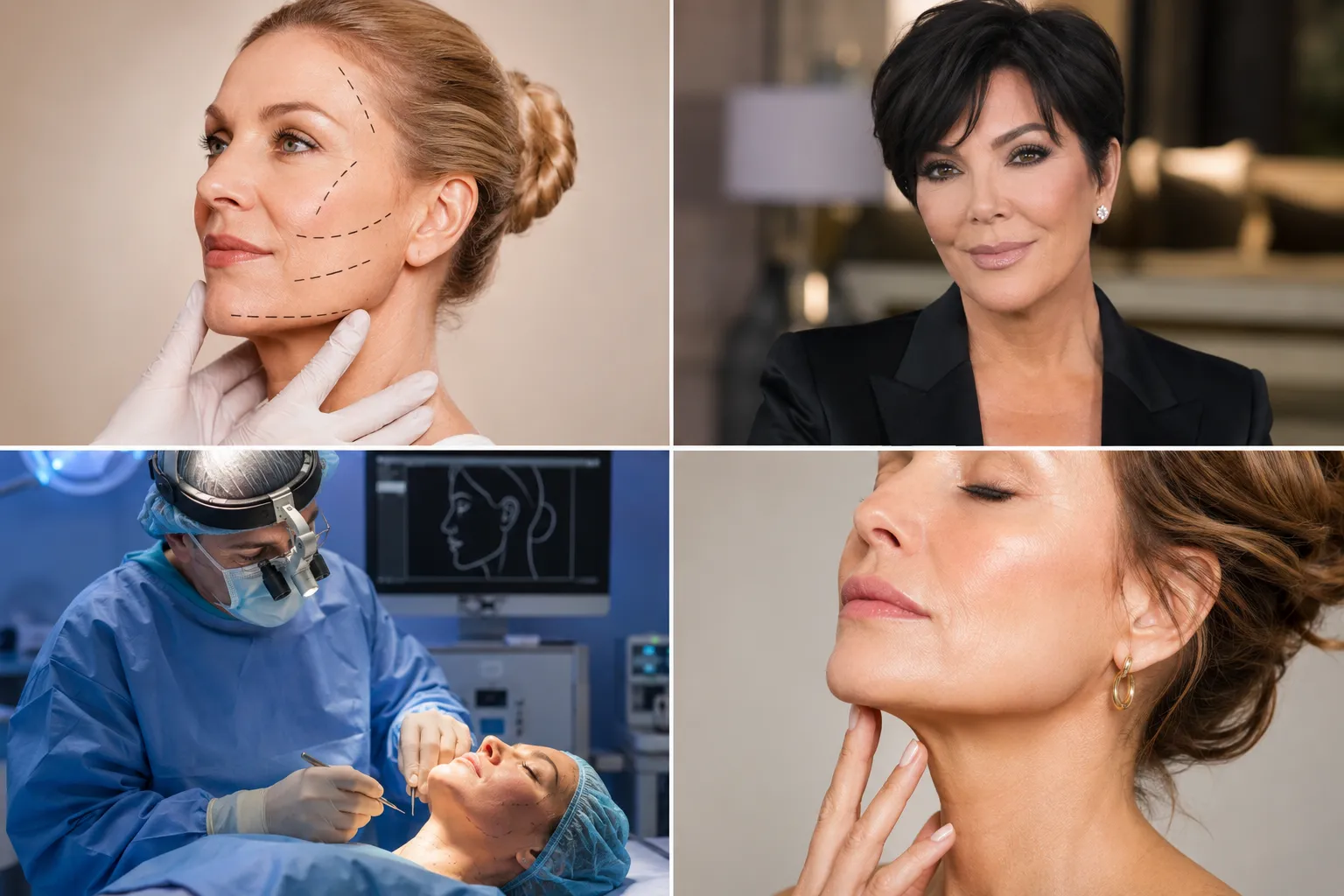
What Makes a Facelift Look Natural — or Obviously Overdone?
A natural-looking facelift usually preserves the person’s identity while sharpening the areas that aging has softened. An overdone result attracts attention to the procedure itself instead of simply making the person look refreshed.
That’s why today’s most praised celebrity transformations often cause confusion before they cause certainty.
You recognize the person immediately. Their face still moves and looks familiar, but the jawline seems cleaner, the cheeks look more supported and the neck suddenly photographs extremely well.
The internet reaction is usually something like: She’s definitely done something… but what?
Visual clues people tend to praise in facelift before-and-after photos include:
- facial identity remains recognizable;
- the jawline looks more defined without appearing unnaturally carved;
- the cheeks look supported rather than dramatically inflated;
- the neck and lower face appear visually balanced;
- the mouth and eyes don’t look strangely pulled sideways;
- the change still looks believable when viewed from more than one angle.
But celebrity before-and-after comparisons come with a huge trap: photographs lie surprisingly well.
Different focal lengths, makeup, weight, hairstyle, lighting, facial expression and filters can create apparent changes that have nothing to do with plastic surgery. Put a smiling 2008 red-carpet photo next to a professionally retouched 2026 studio portrait and you’ve already rigged the game.
For a meaningful facelift before-and-after comparison, look for similar angles, similar expressions and images taken far enough apart to show a genuine change.
Otherwise you may not be analyzing a facelift at all.
You may just be analyzing the difference between bad fluorescent lighting and a photographer who deserves a raise.
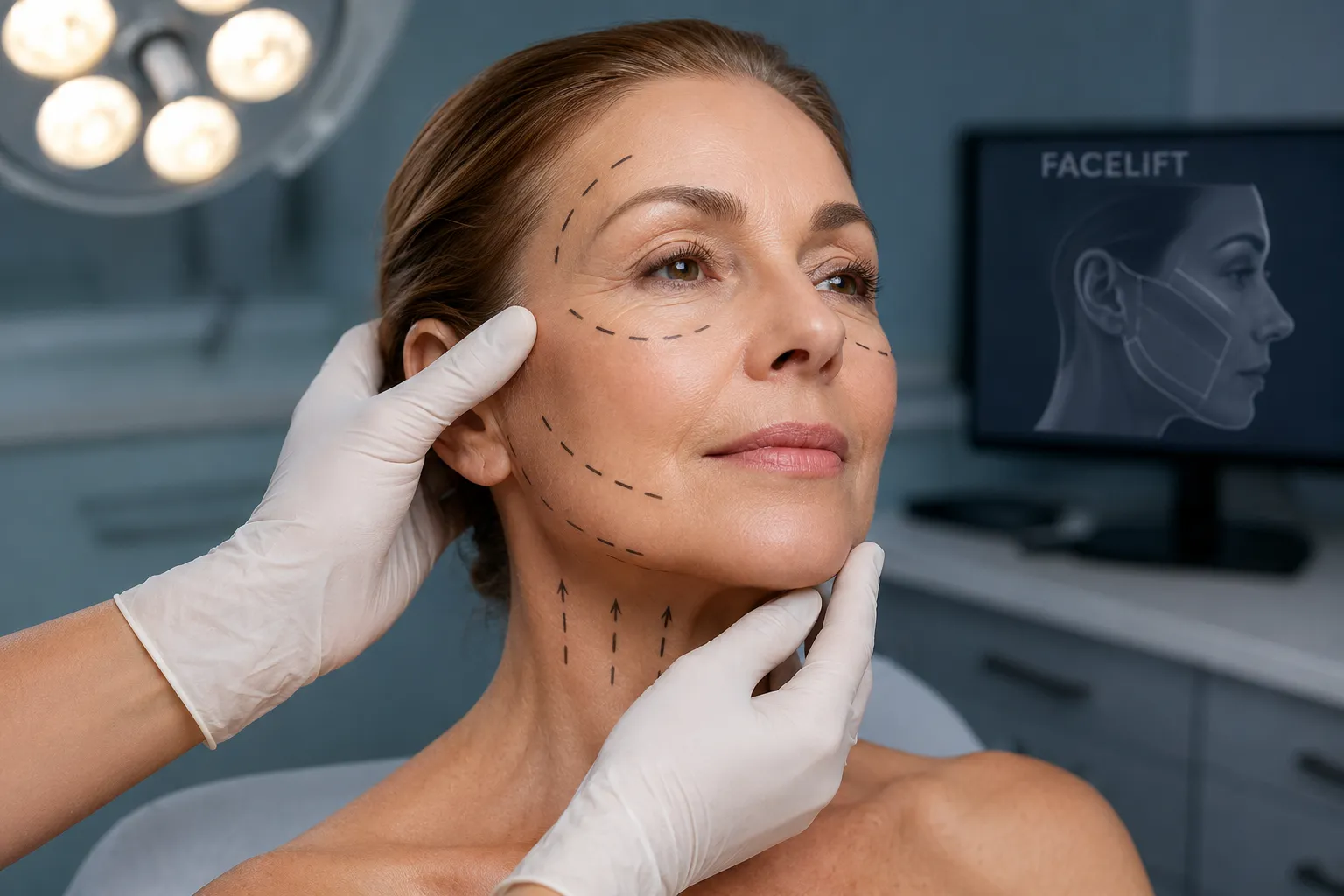
Why Celebrity Facelift Rumors Need a Reality Check
A noticeably younger-looking celebrity has not automatically had a facelift. Unless the celebrity, their representative or another credible firsthand source confirms it, the claim should remain labeled as rumor or speculation.
This distinction matters more than ever because TikTok, Instagram and YouTube have turned celebrity faces into a full-time detective genre.
A new red-carpet appearance can generate side-by-side videos within hours. Jawlines get circled, cheeks get zoomed to 400%, and suddenly someone confidently announces an entire surgical history based on two Getty Images.
Lori Loughlin offers a good 2026 example.
Her youthful early-2026 red-carpet appearance generated substantial online facelift speculation and renewed interest in deep plane facelift searches. But as of the latest available reporting, Loughlin has not publicly confirmed having a facelift.
That means the correct wording isn’t “Lori Loughlin had a facelift.”
It’s: “Her appearance sparked facelift speculation.”
That same rule should apply across celebrity plastic surgery coverage:
- Confirmed: the celebrity has publicly discussed the procedure.
- Reported: credible sources have attributed the procedure to someone with direct knowledge.
- Speculated: fans, commentators or outside experts believe a procedure may have occurred.
- Unknown: a visual change exists, but there isn’t reliable evidence explaining it.
Yes, the less dramatic wording may ruin a perfectly good TikTok conspiracy.
It also happens to be accurate.
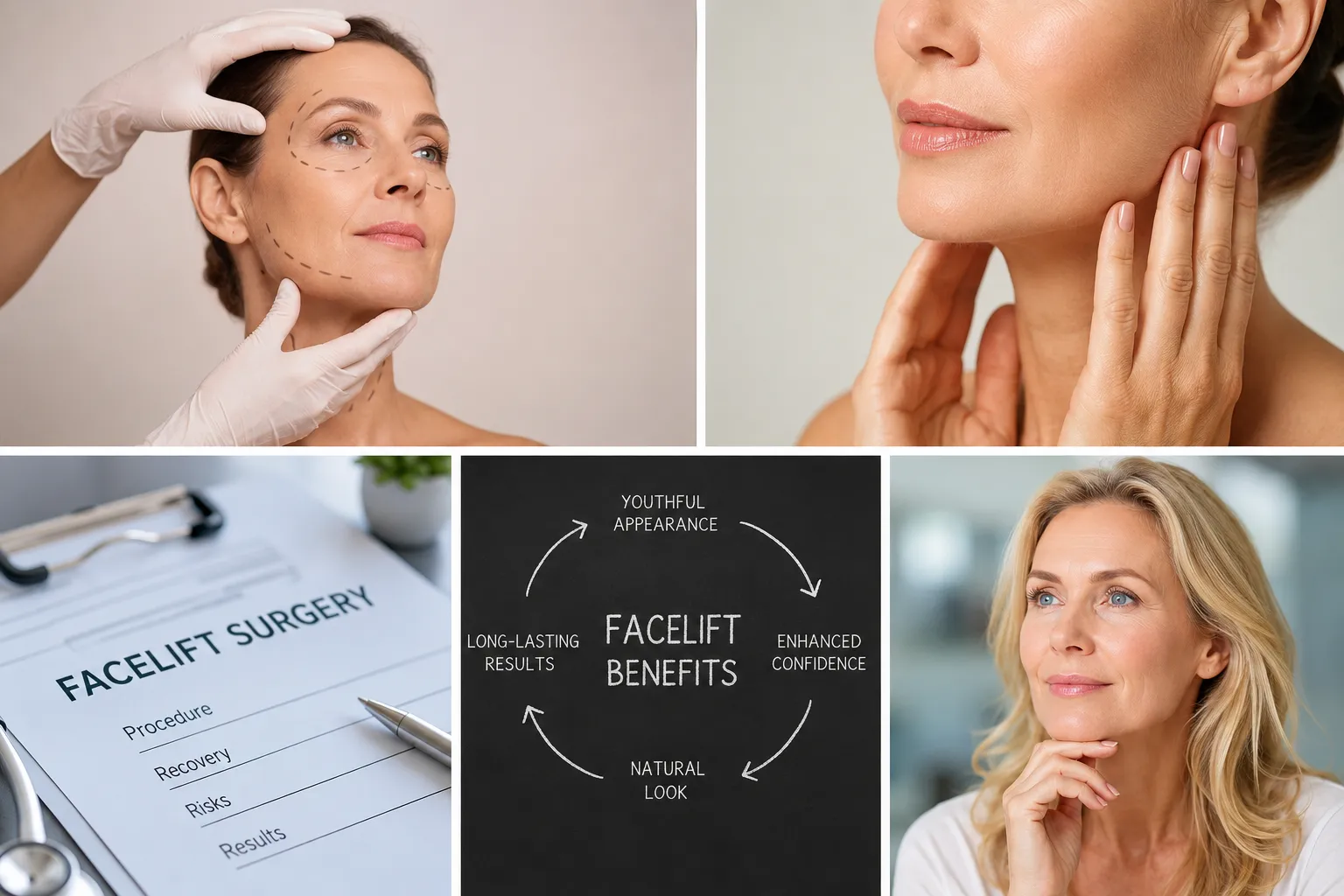
The Facelift Bottom Line: 2026 Is the Year Nobody Wants to Look “Done”
The biggest facelift trend of 2026 isn’t simply getting more surgery — it’s making surgery harder to spot. Natural-looking jawlines, balanced facial proportions and increasingly open celebrity conversations have replaced the old stereotype of the painfully tight Hollywood facelift.
Kris Jenner’s viral transformation showed how quickly one celebrity appearance can turn a facelift into a global beauty story. Denise Richards took transparency further by discussing her surgery and recovery in unusual detail, while Ricki Lake continues to openly celebrate hers.
That visibility changes what people search for.
Terms like facelift before and after, deep plane facelift, mini facelift, celebrity facelift, facelift cost and natural facelift results are no longer niche subjects reserved for cosmetic-surgery forums. They’re part of mainstream celebrity culture.
The procedure itself hasn’t suddenly become brand new. What’s new is the expectation.
People don’t necessarily want strangers to say, “Great facelift.”
They want strangers to wonder why they somehow look like the same person after returning from a suspiciously long vacation — only with a sharper jawline, smoother lower face and the supernatural ability to photograph well from every angle.
And that’s probably the perfect summary of the modern facelift.
The best result doesn’t announce itself. It starts an argument in the comments section.